



Student Loan Forgiveness 2025: Amazing News for Borrowers
Student loan forgiveness has become a lifeline for millions of Americans drowning in educational debt. With over $1.7 trillion in outstanding student loans across the United States, understanding who qualifies for student loan forgiveness programs in 2025 is more critical than ever. Recent policy changes and court decisions have significantly impacted federal student loan relief options, making it essential to know your choices before it’s too late.
Whether you’re a teacher at your local school district, a nurse at a nonprofit hospital, or a government employee, multiple pathways to student loan forgiveness exist. From IDR loan forgiveness plans to Public Service Loan Forgiveness (PSLF) and other targeted programs, navigating these opportunities requires understanding specific eligibility criteria, application deadlines, and the latest updates that could affect your qualification status.
Table of Contents
What Is Student Loan Forgiveness and Why Does It Matter in 2025?
Student loan forgiveness programs eliminate part or all of your federal student loan debt under specific conditions. Unlike loan consolidation or refinancing, forgiveness actually cancels your remaining balance, providing genuine debt relief.
In 2025, these programs have gained renewed importance due to:
- Economic uncertainty affecting graduate job prospects
- Rising inflation impacting monthly budgets
- Court challenges affecting Income-Driven Repayment (IDR) plans
- New federal legislation impacting loan servicer operations
The landscape has shifted dramatically since early 2025, with some programs facing legal challenges while others have been strengthened through executive orders.
Current Student Loan Forgiveness Programs Available in 2025

Public Service Loan Forgiveness (PSLF): The Gold Standard
Public Service Loan Forgiveness remains the most robust program for qualifying borrowers. Recent executive action in March 2025 has renewed support for PSLF, ensuring its continuation despite political changes.
Who qualifies for PSLF in 2025:
- Government employees at federal, state, local, or tribal levels
- Nonprofit organization workers (501(c)(3) status required)
- Peace Corps and AmeriCorps volunteers
- Public school teachers and administrators
- Police officers, firefighters, and emergency responders
- Public hospital and clinic healthcare workers
Key requirements:
- Make 120 qualifying monthly payments
- Work full-time (30+ hours weekly) for qualifying employer
- Hold Direct Loans only (older loans need consolidation)
- Use qualifying repayment plans (Income-Driven or Standard 10-year)
Real-world example: Sarah, a social worker in Chicago making $45,000 annually, qualified for PSLF after 10 years of payments. Her remaining $38,000 balance was forgiven tax-free, saving her family over $500 monthly.
Teacher Loan Forgiveness: Education-Specific Relief
Teachers can have up to $17,500 in federal direct or Stafford loans forgiven through this specialized program designed for educational professionals.
2025 eligibility requirements:
- Teach full-time for five consecutive years
- Work in low-income schools or educational service agencies
- Must have taken out loans after October 1, 1998
- Maintain highly qualified teacher status throughout service period
Qualifying subjects for maximum forgiveness:
- Mathematics teachers (grades 7-12): Up to $17,500
- Science teachers (grades 7-12): Up to $17,500
- Special education teachers: Up to $17,500
- Other teachers: Up to $5,000
Income-Driven Repayment (IDR) Forgiveness: Long-Term Relief
IDR forgiveness occurs after 20-25 years of qualifying payments, depending on your specific plan. However, the SAVE plan faces ongoing legal challenges, with interest accrual resuming August 1, 2025.
Available IDR plans in 2025:
- Income-Based Repayment (IBR): 10% of discretionary income, 20-year forgiveness
- Income-Contingent Repayment (ICR): 20% of discretionary income, 25-year forgiveness
- Pay As You Earn (PAYE): 10% of discretionary income, 20-year forgiveness
Important 2025 update: SAVE and REPAYE plans are currently unavailable due to court challenges, limiting borrower options for new applications.
Professional-Specific Forgiveness Programs
Healthcare Workers: Multiple Pathways to Relief
Healthcare professionals have several specialized options beyond traditional programs:
National Health Service Corps (NHSC):
- Primary care providers in underserved areas
- Up to $50,000 initial loan repayment
- Additional funding available for contract extensions
- 2025 licensing deadline: June 30, 2025
Nurse Corps Loan Repayment:
- Registered nurses in critical shortage facilities
- Up to 85% loan repayment over three years
- Average benefit: $41,000 according to HRSA data
Military Service Members: Comprehensive Benefits
Active duty and veteran service members access multiple forgiveness options:
Military College Loan Repayment Program:
- Up to $65,000 loan repayment for qualifying service
- Available across Army, Navy, Air Force, and Space Force
- Requires specific military occupational specialties
Public Service Loan Forgiveness for Veterans:
- Qualifying government employment after service
- VA hospital workers commonly benefit
- Combined with GI Bill benefits for maximum impact
Legal Professionals: State-Specific Programs
Many states offer loan forgiveness for attorneys serving underserved populations:
State-specific examples:
- California: Up to $11,000 annually for public interest attorneys
- New York: $98,000 total forgiveness for qualifying service
- Texas: Rural attorney loan repayment assistance
How to Check Your Eligibility: Step-by-Step Guide
Step 1: Identify Your Loan Types
Log into your Federal Student Aid account at studentaid.gov to verify:
- Loan servicer information
- Outstanding balances
- Loan types (Direct, FFEL, Perkins)
- Current repayment status
Step 2: Assess Your Employment Qualification
Use the PSLF Help Tool to determine if your employer qualifies:
- Submit Employment Certification Form annually
- Verify 501(c)(3) status for nonprofits
- Confirm government entity classification
Step 3: Calculate Your Payment Progress
Track qualifying payments using:
- FedLoan Servicing records (if applicable)
- MOHELA PSLF tracking tools
- Annual Employment Certification confirmations
Step 4: Apply Strategic Timing
Consider these timing factors:
- Employment Certification Form deadlines
- Annual income recertification dates
- Potential career changes affecting eligibility
Common Qualification Mistakes to Avoid in 2025

Payment Plan Errors
Many borrowers unknowingly disqualify themselves by choosing incorrect repayment plans:
Qualifying plans:
- All Income-Driven Repayment plans
- Standard 10-year repayment plan
Non-qualifying plans:
- Graduated repayment
- Extended repayment
- Alternative repayment plans
Employment Documentation Gaps
Missing employment certification can derail forgiveness applications:
- Submit forms annually, not just at application
- Document employer changes immediately
- Maintain records of qualifying employment periods
Loan Consolidation Timing Issues
Consolidating loans resets your payment count to zero. Strategic considerations:
- Consolidate non-Direct loans before starting PSLF
- Avoid unnecessary consolidation if already making progress
- Understand weighted average interest rate implications
2025 Updates: What’s Changed This Year
SAVE Plan Suspension Impact
The suspension of the SAVE plan has significant implications for borrowers:
- Interest accrual resumed August 1, 2025, for SAVE borrowers
- Administrative forbearance ended for affected borrowers
- Alternative IDR plan enrollment required for continued benefits
PSLF Improvements Under New Administration
March 2025 executive action restored and strengthened PSLF, including:
- Streamlined application processes
- Enhanced borrower protections
- Improved servicer accountability measures
Federal Interest Rate Environment
With the Federal Reserve’s monetary policy decisions affecting student loan rates, borrowers should consider:
- Fixed vs. variable rate implications
- Refinancing opportunities for private loans
Maximizing Your Forgiveness Benefits: Advanced Strategies
Income Optimization Techniques
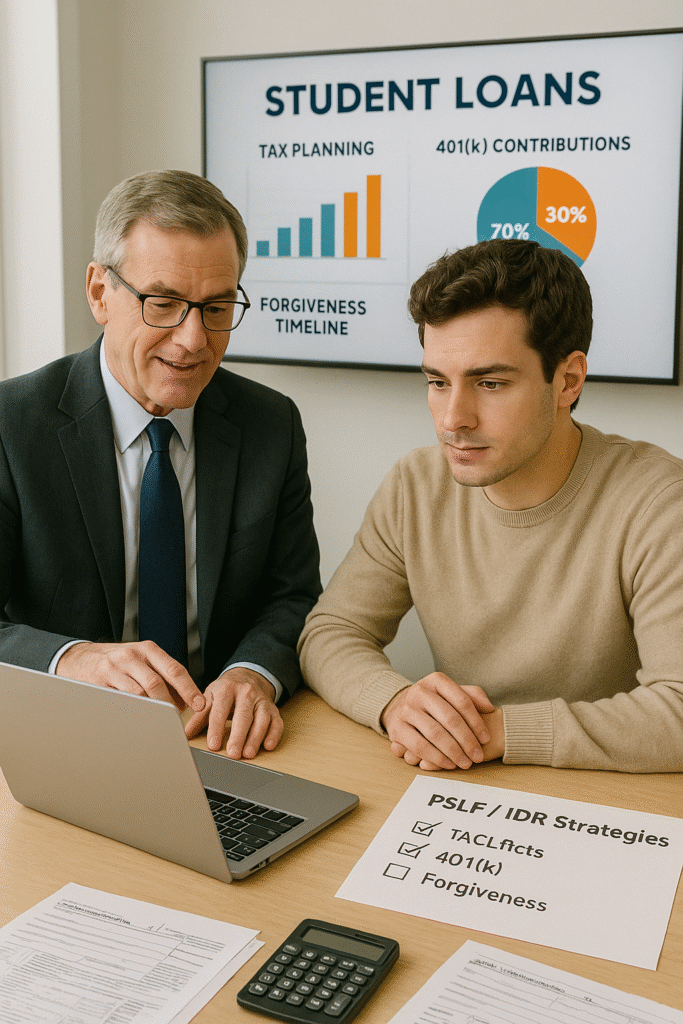
Strategic income management can reduce IDR payments while maintaining forgiveness eligibility:
Legal income reduction methods:
- Maximize 401(k) contributions to reduce Adjusted Gross Income
- Utilize Health Savings Account contributions
- Time bonus payments strategically around recertification dates
Tax Planning for Forgiveness
Understanding tax implications prevents surprise liabilities:
- PSLF forgiveness is tax-free under current law
- IDR forgiveness may create taxable income (insolvency exceptions apply)
- State tax treatment varies significantly
Employer Strategy Optimization
Coordinate career moves with forgiveness timelines:
- Document qualifying employment before job changes
- Research new employer PSLF qualification status
- Consider timing of promotions or career transitions
State-Specific Programs: Beyond Federal Options
Many states offer additional loan forgiveness programs targeting local workforce needs:
High-Demand States with Robust Programs
California:
- State Loan Repayment Program for healthcare workers
- Cal Grant programs for educators
- Public interest attorney assistance
Texas:
- Teach for Texas loan forgiveness
- Health professional shortage area programs
- Rural attorney recruitment initiatives
New York:
- Get on Your Feet loan forgiveness for recent graduates
- Teachers of Tomorrow recruitment program
- Healthcare worker incentive programs
FAQs About Student Loan Forgiveness 2025
Q1. Who qualifies for student loan forgiveness in 2025?
Most federal student loan borrowers working in public service, teaching, nonprofit organizations, or using IDR loan plans may qualify. Each program has specific requirements for employment type, repayment plans, and loan types.
Q2. How do I apply for federal student loan relief?
You can apply through studentaid.gov by submitting the required forms for programs like Public Service Loan Forgiveness (PSLF) or Teacher Loan Forgiveness. Annual employer certification and income verification may be required.
Q3. Is student loan forgiveness taxable in 2025?
Currently, PSLF forgiveness is tax-free under federal law. However, some IDR loan forgiveness amounts may be treated as taxable income after 20–25 years unless Congress extends the tax exemption.
Q4. What are the most common mistakes when applying for student loan forgiveness?
Borrowers often use the wrong repayment plans, miss employer certifications, or consolidate loans too late, resetting their progress. Regular documentation and correct plan enrollment are essential.
Q5. Are private student loans eligible for student loan forgiveness programs?
No, student loan forgiveness programs apply only to federal student loans. Private loan borrowers should explore lender-specific hardship or refinancing options instead.
Take Action: Your Next Steps for Student Loan Forgiveness

Student loan forgiveness in 2025 offers genuine opportunities for debt relief, but success requires proactive planning and careful attention to program requirements. Whether you’re pursuing PSLF, teacher forgiveness, or IDR options, start documenting your eligibility today.
Immediate action items:
- Log into studentaid.gov to verify your loan details
- Submit Employment Certification Forms if pursuing PSLF
- Research state-specific programs in your area
- Contact your loan servicer about available options
- Set calendar reminders for annual recertification deadlines
The key to successful loan forgiveness lies in understanding program requirements, maintaining proper documentation, and staying informed about policy changes. With strategic planning and persistence, you can join the thousands of Americans who have eliminated their student debt through these valuable programs.
For more insights on managing your federal student loans and maximizing your savings potential, explore additional resources at SmartSaveUSA.com. Stay informed about the latest student loan interest rate changes and discover how federal monetary policy impacts your financial future.
External Authority Sources for Additional Information:
- Federal Student Aid – Official government resource for all federal loan programs
- Department of Education – Policy updates and program announcements
- Consumer Financial Protection Bureau – Borrower rights and complaint resolution